[Ambition OS: Visual Anchor Staged]
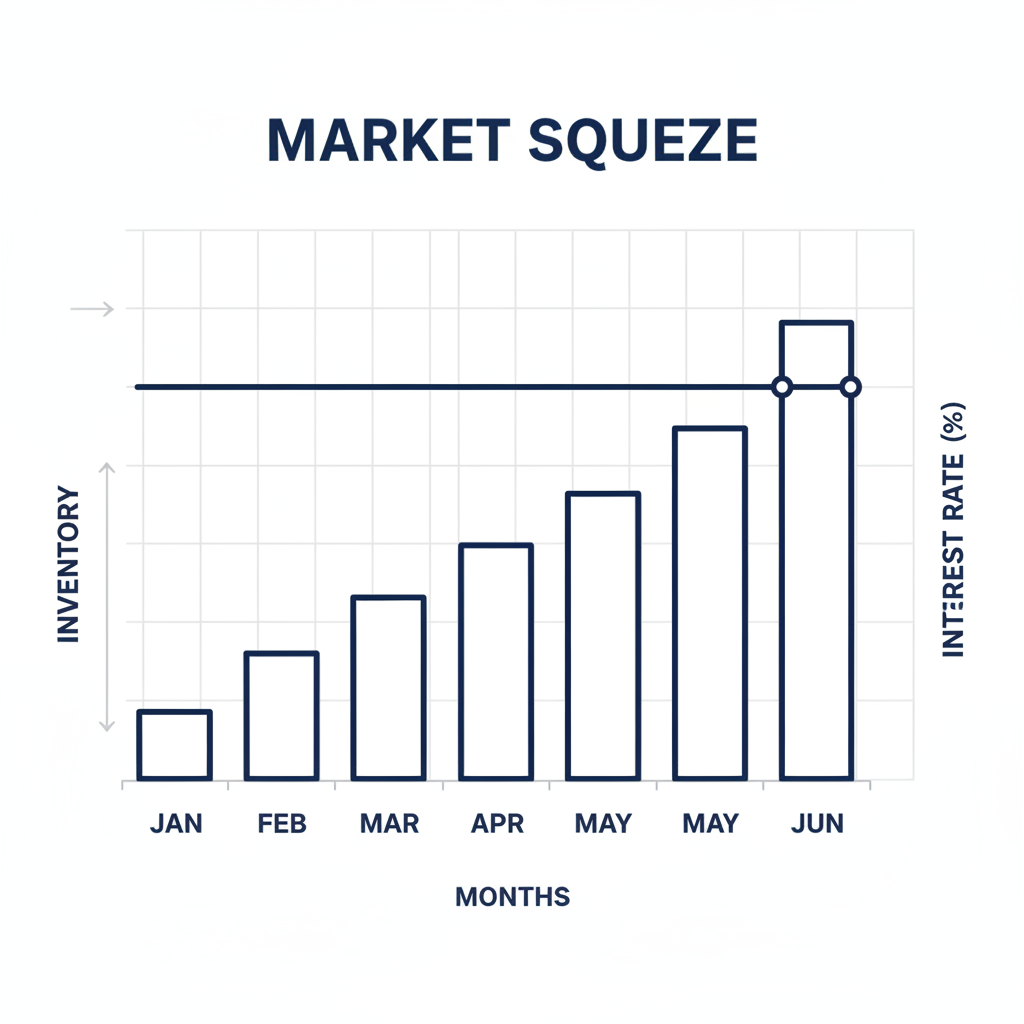
As we move into March 2026, the interest rate environment has remained “sticky.” Despite early-year predictions of a downward trend, the market is experiencing a “squeeze” that is separating the operators from the speculators.
1. The 2026 Real Estate “Squeeze”
A combination of factors is causing this squeeze: Elevated carry costs, rising inventory in major Sunbelt markets like Phoenix and Miami, and tightening credit boxes from national lenders.
Institutional Insight: 2026 is the year of the operator. Those who understand how to structure their debt around interest-only loans will be the ones to pick up the distressed inventory hitting the market.
2. Navigating the 2026 Environment
- Prioritize Interest-Only Debt: Preserves monthly cash flow during the renovation period and minimizes your burn rate.
- Focus on “Micro-Markets”: Find sub-zip-codes where demand is still outstripping supply.
- Use Leverage Wisely: Focus on maximizing LTC [Loan-to-Cost] while maintaining a conservative 65-70% ARV cap for safety.
3. The Bottom Line
Smart investors in 2026 aren’t waiting for a rate cut—they’re adjusting their strategy to take advantage of the market shifts. Ambition Lending is currently accepting new Q2 applications for common-sense bridge financing.
Strategic FAQ: 2026 Market Squeeze
Sunbelt markets saw significant over-building and speculation in previous years. The current sticky rate environment has increased carry costs, forcing speculative inventory onto the market.
We prioritize interest-only debt structures that minimize the monthly burden on the operator while they execute their renovation and exit strategy.
Ready to Scale Your 2026 Portfolio?
Get an institutional-grade proof of funds in 48 hours.
Related: bridge underwriting metrics and debt yield explained.
Frequently Asked Questions
How do higher interest rates change investor underwriting?
Higher rates compress margins, increase carrying cost, and make weak exits less forgiving. Ambition Lending expects borrowers to underwrite deals with more discipline when money costs more.
Should investors stop buying when rates rise?
Not necessarily. Investors should become more selective, lower leverage where needed, and focus on deals with stronger spreads and clearer exits. Ambition Lending believes disciplined buyers can still win in a tighter rate environment.
What deals become riskier in a high-rate market?
Thin-margin flips, unstable bridge deals, and projects with long timelines become riskier when rates stay elevated. Ambition Lending wants the business plan to work even if the market is less forgiving than hoped.
How can borrowers protect margin when rates are elevated?
Borrowers protect margin by buying right, keeping rehab timelines tight, controlling scope creep, and avoiding overly aggressive exit assumptions. Ambition Lending cares about execution discipline more than optimistic spreadsheets.
Why does rate reality matter more than headline pricing?
Because total project outcome depends on carry cost, extension risk, timeline, and exit liquidity — not just the advertised note rate. Ambition Lending wants borrowers to price the whole capital stack honestly.